
In this review
- 01Vanguard Personal Pension fees at a glance
- 02Scoring breakdown
- 03What is Vanguard?
- 04Is Vanguard safe?
- 05Investment options
- 06Pension transfers
- 07Fees and charges
- 08Drawdown options
- 09Platform and app
- 10Research, tools and education
- 11Customer service
- 12Pros and cons
- 13Suitability
- 14Final verdict
- 15FAQs
- 16How we review pensions
Vanguard Personal Pension fees at a glance
A 0.15% account fee, capped at £375 a year across all your Vanguard accounts, plus fund costs of 0.06% to 0.79% (LifeStrategy is 0.20%). If your accounts total under £32,000, a £4 a month minimum applies instead. There are no fund dealing, transfer or drawdown fees.
| Charge | Cost |
|---|---|
| Account fee | 0.15% a year, capped at £375 across all your Vanguard accounts |
| Minimum fee | £4 a month (£48 a year) if your Vanguard accounts total under £32,000 |
| Fund costs | 0.06% to 0.79% a year (LifeStrategy 0.20%) |
| Fund dealing | Free |
| ETF dealing | Free at the daily dealing time, or £7.50 for a real-time trade |
| Drawdown, transfers in and out | Free |
Fees verified 9th November 2026 against Vanguard’s published charges. Compare every provider in our pension costs tool.
This review is financial education, not personal advice or a recommendation to use any specific pension provider. The right provider for you depends on your individual circumstances, retirement goals, tax position and attitude to risk.
Pensions are long-term investments. The value of your pension can go down as well as up, and you may get back less than you put in. If you are unsure, speak to a regulated financial adviser.
Scoring breakdown
0.15% capped at £375, plus very low fund costs. The £48 minimum fee under £32,000 holds it back on small pots.
Clean and easy, but limited by design: Vanguard funds only and no advanced tools.
Quick and fully online. Open with £500 or £100 a month.
Good fund factsheets, but no shortlists or analyst views.
One of the world's largest asset managers, owned by its US funds, and FCA-regulated in the UK.
Strong on the basics of long-term, low-cost investing. Lighter on drawdown planning.
Phone and secure messaging. Efficient rather than premium.
*How we score: each pension is scored out of 5 in seven categories. The overall score is a weighted average: fees 30%, trading platform or app 15%, safety 15%, customer service 15%, account opening 10%, research 7.5% and education 7.5%. Fee scores come from each provider's average yearly cost ranking across six pot sizes from £10,000 to £500,000, assuming a fund-based pension with a typical 0.20% tracker fund charge on DIY platforms. Share trading and share-holding charges are not included, so that all 10 pensions can be compared fairly. Read our full scoring method.
What is Vanguard?
Vanguard was founded in the United States in 1975 by John Bogle, who launched the first index fund for ordinary investors. It’s now one of the largest investment managers in the world. Its UK direct arm, Vanguard Investor, offers a Personal Pension, a Stocks and Shares ISA, a Junior ISA and a General Account.
The pension is built for passive investing. Rather than picking individual investments, you choose from Vanguard’s own index funds and ready-made portfolios, and the funds do the diversifying and rebalancing for you. If you’d rather not choose at all, there’s also a managed option where Vanguard picks the portfolio for an extra 0.30% a year.
Quick facts
- Product type: Personal pension (often searched for as the “Vanguard SIPP”)
- Provider: Vanguard Asset Management Limited, part of The Vanguard Group
- Regulator: Financial Conduct Authority (FCA), FRN 527839
- FSCS protection: up to £85,000 per person, per firm
- Account types: Personal Pension, Stocks and Shares ISA, Junior ISA, General Account (no Lifetime ISA)
- Minimum to open: £500 lump sum or £100 a month
- Headline fee: 0.15% a year, capped at £375. £4 a month minimum if your Vanguard accounts total under £32,000
- Drawdown: yes, free flexi-access drawdown and lump sums
Is Vanguard safe?
Yes. Vanguard is one of the largest investment firms in the world, and its UK business is authorised and regulated by the FCA.
Key safety points:
- Regulated by the FCA (Vanguard Asset Management Limited, FRN 527839)
- One of the world’s largest asset managers, with a track record going back to 1975
- An unusual ownership structure: The Vanguard Group is owned by its US funds, and so by the people who invest in them, which helps keep costs low
- Pension assets are held separately from Vanguard’s own money
- FSCS protection of up to £85,000 per person, per firm
FSCS protection covers you if Vanguard as a firm were to fail. It does not protect you against your investments falling in value. Investment risk is normal and expected, and the value of your pension will rise and fall over time.
Investment options
Vanguard doesn’t offer individual shares, investment trusts or other managers’ funds. You choose from around 80 of Vanguard’s own funds and ETFs, which for most passive investors covers everything they need:
- Global and regional share index funds, including the popular FTSE Global All Cap Index Fund
- UK share index funds
- Bond and gilt index funds
- LifeStrategy funds: ready-made global portfolios with 20%, 40%, 60%, 80% or 100% in shares
- Target Retirement funds: portfolios that gradually move from shares to bonds as your chosen retirement year approaches
- Managed pension: Vanguard chooses and runs the portfolio for you, for an extra 0.30% a year
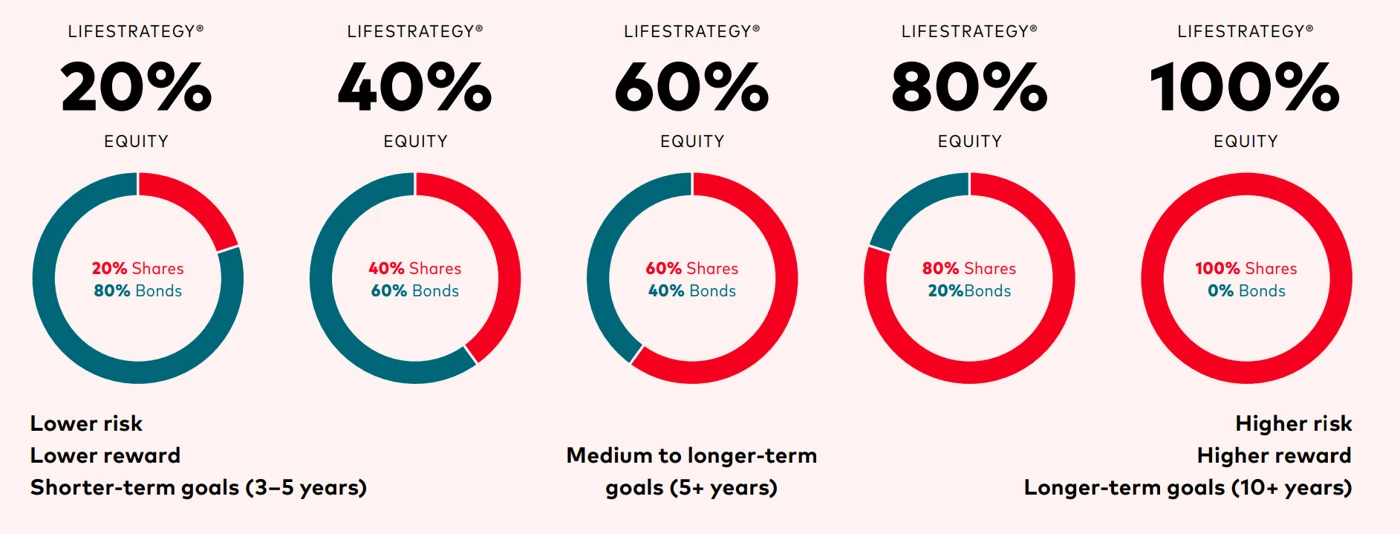
LifeStrategy is one of the most widely held fund ranges in UK retail investing. One fund gives you a complete, globally diversified portfolio that’s rebalanced automatically. In January 2026 Vanguard cut the cost from 0.22% to 0.20% a year, and between March and June 2026 it reduced the funds’ UK bias to 20% of the shares and 20% of the bonds, for wider global diversification.
Vanguard’s range is narrow by design. For passive, long-term investors that’s a strength: one LifeStrategy or Target Retirement fund can be a complete pension. If you want individual shares, investment trusts or other managers’ funds, a full-service SIPP will suit you better.
Pension transfers
Vanguard doesn’t charge to transfer a pension in. You give it your old pension’s details and it contacts your provider and handles the transfer for you. Most transfers take a few weeks, depending on how quickly the old provider responds.
One thing to know: if your old pension holds non-Vanguard investments, they’ll be sold and moved across as cash, for you to reinvest in Vanguard funds. That means you’ll be out of the market for a short time. Vanguard funds you already hold elsewhere can usually move across as they are.
Always check for exit penalties, valuable guarantees (such as guaranteed annuity rates) and safeguarded or defined benefit rights before moving a pension. Defined benefit transfers above £30,000 legally require regulated advice. If in doubt, speak to a financial adviser first.
Fees and charges
Fee breakdown
| Charge | Cost |
|---|---|
| Account fee | 0.15% a year, capped at £375 across all your Vanguard accounts |
| Minimum fee | £4 a month (£48 a year) if your Vanguard accounts total under £32,000 |
| Fund costs | 0.06% to 0.79% a year depending on the fund. LifeStrategy is 0.20% |
| Fund dealing | Free |
| ETF dealing | Free at the daily dealing time, or £7.50 for a real-time trade |
| Managed pension | An extra 0.30% a year |
| Drawdown, transfers in and out | Free |
The £4 monthly minimum, introduced in January 2025, is based on the total of your Vanguard pension, ISA and General Account. Junior ISAs don’t count. Above £32,000, you simply pay 0.15%.
What would Vanguard cost you?
Move the slider to see the yearly account fee for your pot, next to two other low-cost pensions from our comparison.
- Vanguard
- AJ Bell
- Interactive Investor
Yearly platform fee only, using each provider's published charges. Dealing charges and fund costs are extra. Vanguard holds Vanguard funds only, with a £48 a year minimum under £32,000 and a £375 cap.
Yearly cost compared
| Provider | £10,000 pot | £100,000 pot | £500,000 pot |
|---|---|---|---|
| Vanguard | £68 | £350 | £1,375 |
| AJ Bell SIPP | £45 | £450 | £1,875 |
| Interactive Investor | £92 | £272 | £1,180 |
| Hargreaves Lansdown | £55 | £550 | £2,500 |
Yearly platform or account fee plus a typical 0.20% tracker fund, for a pension held in funds. Dealing charges are extra. See every provider and pot size in our pension costs comparison.
Vanguard cost examples
Your Vanguard cost is the account fee plus the fund cost. These examples use LifeStrategy at 0.20%. For a fair comparison, the DIY platforms include a typical 0.20% tracker fund, and the managed pensions include their own fund costs. Figures come from our pension costs comparison tool.
£10,000 pension pot
The 0.15% account fee would only be £15, but because you’re under £32,000 the £48 minimum applies instead. Add £20 of fund costs and it comes to around £68 a year. The minimum fee is why Vanguard isn’t the cheapest choice for small pots.
- Vanguard: ~£68 (£48 minimum + £20 fund)
- AJ Bell Ready-made Pension: £35 (0.35% all-in)
- Moneybox: ~£44 (0.15% service fee + 0.29% fund)
- AJ Bell SIPP: ~£45 (0.25% platform + 0.20% fund)
£100,000 pension pot
At £100,000 you pay the full 0.15% (£150) plus £200 of fund costs: about £350 a year, or 0.35% all-in. From here upwards, Vanguard is very competitive.
- Vanguard: ~£350 (£150 account + £200 fund)
- Interactive Investor: ~£272 (£71.88 flat fee + £200 fund)
- AJ Bell SIPP: ~£450 (0.25% platform + 0.20% fund)
- Hargreaves Lansdown: ~£550 (0.35% platform + 0.20% fund)
£500,000 pension pot
At £500,000 the account fee stops at £375, but the 0.20% fund cost applies to the whole pot (£1,000), so it’s about £1,375 a year. At this size, the fund cost is most of what you pay.
- Vanguard: ~£1,375 (£375 capped account + £1,000 fund)
- Interactive Investor: ~£1,180 (£179.88 flat fee + £1,000 fund)
- PensionBee (Tracker): ~£1,500 (0.50% all-in, halved above £100k)
- AJ Bell SIPP: ~£1,875 (tiered platform fee + £1,000 fund)
Are Vanguard fees good value?
Yes, for the right investor. From around £32,000 upwards, a 0.15% account fee capped at £375 plus a 0.20% LifeStrategy fund gives an all-in cost few rivals match. In our comparison tool, only Interactive Investor’s flat fee is consistently cheaper on larger pots.
The two catches are the £48 minimum on pots under £32,000, and the fact that you can only hold Vanguard’s own funds. You’re trading choice for a low price.
Whether Vanguard is cheaper than another provider depends on your pension size, the investments you choose, the services you need and each provider’s current charges. Compare the total cost for your own circumstances rather than relying on a headline percentage.
Drawdown options
Can you take drawdown with Vanguard? Yes. Vanguard offers flexi-access drawdown with no set-up fee, no annual drawdown fee and no income payment fee. You keep paying the normal account fee and fund costs on what stays invested.
Your options include:
- Taking up to 25% of your pension as tax-free cash (subject to the lump sum allowance)
- Flexi-access drawdown, leaving the rest invested and taking a flexible income
- Lump sums where 25% of each payment is tax-free (UFPLS)
- Regular income or one-off withdrawals, set up online
The minimum age to access your pension is currently 55, rising to 57 on 6th April 2028. Vanguard doesn’t sell annuities, so if you want one you’d buy it from another provider.
Your pot is often at its largest in retirement, so a capped account fee and low fund costs leave more of your money working for you. Over a long retirement, the difference between paying 0.35% a year and 1% a year can add up to tens of thousands of pounds.
Platform and app
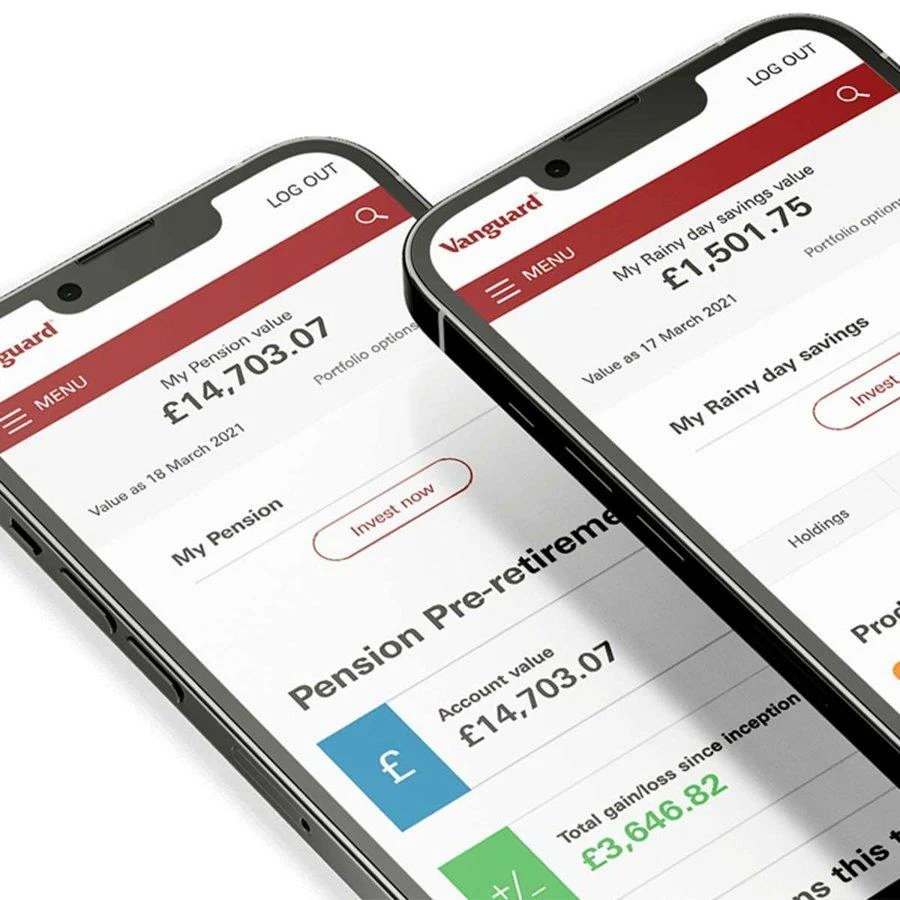
Vanguard’s website and app are clean and easy to use. You can check your pension’s value, see your holdings and performance, pay in, switch funds and track a transfer. Because you can only hold Vanguard funds, it’s simpler than a full-service platform: no share dealing screens or advanced order types, beyond the optional real-time ETF dealing.
You pick a fund, place your order and it’s bought at the next daily dealing time. For a buy-and-hold investor, that’s all you need.
Research, tools and education
Research and tools
- Detailed fund factsheets showing holdings, regions, sectors, performance and costs
- Portfolio breakdowns showing your overall mix of shares and bonds
- Retirement and cost calculators
There are no fund shortlists, analyst views or share screeners, which fits Vanguard’s passive approach.
Education
Vanguard is a good teacher of sound investing habits: diversifying, keeping costs low and staying invested for the long term. Its content on retirement income, such as how much to draw and managing market falls in drawdown, is lighter than at Hargreaves Lansdown, AJ Bell or Fidelity.
Customer service
Vanguard offers UK phone support during office hours, plus secure messaging and an online help centre. It’s built around efficient self-service rather than hand-holding. Customer reviews have historically been more mixed than for some rivals, with occasional complaints about response times on transfers and more complex questions. For a self-directed investor who doesn’t need much support, it does the job.
Pros and cons
Reasons to consider
- 0.15% account fee, capped at £375 a year
- Very low fund costs, with LifeStrategy at 0.20%
- LifeStrategy and Target Retirement are complete one-fund pensions
- No fund dealing, transfer, exit or drawdown fees
- A large, long-established, FCA-regulated firm
Reasons to think twice
- £48 a year minimum fee if your Vanguard accounts total under £32,000
- Vanguard’s own funds and ETFs only: no shares, investment trusts or other managers’ funds
- No fund shortlists or analyst research
- Non-Vanguard investments are sold to cash when you transfer in
- No annuities and no Lifetime ISA
Suitability
A good fit if…
- You’re a long-term passive investor happy to use Vanguard’s own funds
- You want a complete, low-cost pension in a single fund
- Your Vanguard accounts total more than £32,000, or soon will
- You’re comfortable managing things online without much support
Probably not the best fit if…
- You want individual shares, investment trusts or other managers’ funds
- Your pot is small and will stay under £32,000 for a while
- You want detailed research, fund shortlists or analyst views
- You want someone to talk you through your retirement income options
Final verdict
Vanguard’s Personal Pension is one of the lowest-cost ways to run a passive pension in the UK, as long as you’re happy to invest only in Vanguard’s own funds. A 0.15% account fee capped at £375, with LifeStrategy at 0.20%, gives an all-in cost that very few rivals match for the same simplicity.
Its biggest strengths are:
- A 0.15% account fee, capped at £375 however large your pot grows
- Low-cost LifeStrategy and Target Retirement funds that work as complete pensions
- A simple, trusted, set-and-forget approach
- Free drawdown, so it stays cheap right through retirement
The trade-offs are the £48 minimum on pots under £32,000, the narrow fund range and lighter research and retirement support than the full-service platforms. For a buy-and-hold investor with £32,000 or more, it’s a strong long-term home. If you want breadth and control, a full-service SIPP such as AJ Bell or Interactive Investor will suit you better.
One of the cheapest mainstream pensions for passive investors, and a strong one-fund pension, as long as you’re happy inside Vanguard’s own fund range.
FAQs
Is Vanguard a good pension provider?
Yes, particularly for low-cost passive investing. It charges 0.15% a year capped at £375, plus low fund costs, and its LifeStrategy and Target Retirement funds can be a complete pension. It’s less suited to people who want individual shares or a wide fund choice.
Is Vanguard safe?
Yes. Vanguard Asset Management Limited is FCA-regulated (FRN 527839) and part of one of the world’s largest investment groups. Pension assets are held separately from Vanguard’s own money, and eligible investments are covered by the FSCS up to £85,000. That protects you if the firm fails, not against your investments falling in value.
Is the Vanguard pension a SIPP?
Vanguard calls it a Personal Pension. It works like a simple SIPP that you manage yourself, but you can only invest in Vanguard’s own funds and ETFs. If you want shares or other managers’ funds, you’d need a full-service SIPP.
What fees does Vanguard charge?
A 0.15% account fee, capped at £375 a year across all your Vanguard accounts, plus fund costs of 0.06% to 0.79% (LifeStrategy is 0.20%). If your accounts total under £32,000, a £4 a month minimum applies instead. There are no fund dealing, transfer or drawdown fees.
Is the £4 a month Vanguard fee worth paying?
It depends on your pot. The £48 a year minimum only applies if your Vanguard accounts total under £32,000, and it’s a bigger percentage the smaller your pot. On £10,000, the AJ Bell Ready-made Pension, Moneybox and the AJ Bell SIPP all cost less in our comparison tool.
Can I transfer my pension to Vanguard?
Yes, free of charge. Non-Vanguard investments will be sold and moved across as cash, so you may be out of the market for a short time. Check for exit fees and valuable guarantees first, and remember defined benefit transfers over £30,000 need regulated advice.
Does Vanguard offer drawdown?
Yes. You can take up to 25% tax-free and draw a flexible income, with no set-up, annual or income payment fees. Vanguard doesn’t sell annuities, so you’d buy one elsewhere.
Is Vanguard cheaper than AJ Bell or Hargreaves Lansdown?
For passive fund investing above £32,000, usually yes. Vanguard’s 0.15% account fee undercuts AJ Bell’s 0.25% and Hargreaves Lansdown’s 0.35% on funds, and it’s capped at £375. AJ Bell and HL offer far more choice, so you pay more for breadth you may or may not need.
How we review pensions
At When Can I Retire?, we assess pension providers using publicly available information, including published charges, product documentation, investment options, retirement features and customer support information.
We compare providers using the same broad criteria, with particular emphasis on long-term costs, investment choice and features that matter when planning for retirement. Our scores reflect our editorial assessment of the information available at the time of review.
Provider charges, investment options and pension rules can change. We aim to review our articles periodically, but readers should confirm the latest details directly with the provider before making a decision.
Our reviews are intended to help readers understand the differences between pension providers. They are general financial education, not personalised financial advice or a recommendation to transfer or open a pension.
Read how we score pensions for the full method.
This article is for information and education only and is not regulated financial advice or a personal recommendation. Pension and investment values can fall as well as rise, and you may get back less than you invest. Tax treatment depends on your individual circumstances and may change.
When transferring a pension, check carefully for exit fees, loss of guarantees or protected benefits, and consider taking regulated financial advice. If you would like personalised pension advice, contact Kyte Financial Planning at kytefp.co.uk.
Looking for retirement advice?
Fill in a short form and you'll be put in touch with a Chartered Financial Planner who will discuss your situation with you.
Get in touch with an adviser →Are you ready to retire?
See if you're on track with your goals, and what changes (if any) need to be made.
Take the quiz →
Jamie Kyte APFS
Jamie Kyte APFS is a Chartered Financial Planner and Independent Financial Adviser with over a decade of experience helping people plan for retirement. He specialises in retirement income planning, pension drawdown and helping clients make confident decisions about when they can afford to stop working.
Jamie holds the Chartered Financial Planner title awarded by the Chartered Insurance Institute, alongside the Advanced Diploma in Financial Planning (Level 6) and the Diploma in Financial Planning (Level 4). He is the founder of When Can I Retire? and Kyte Financial Planning.
Kyte Financial Planning is an Appointed Representative of ValidPath Limited, which is authorised and regulated by the Financial Conduct Authority. You can verify Jamie’s regulatory status on the FCA Register and connect with him on LinkedIn.
More from JamieThis review is for information and education only and is not personal financial advice. All charges, plans and features are correct as at the review's last update date. Pension and investment values can fall as well as rise, and you may get back less than you invest.